Water is one of those things we rarely think about until something changes. You might notice a strange taste in your morning tea, white marks around the kitchen faucet, or a showerhead that seems to clog up every few weeks. At first, these things feel like minor annoyances. Then they keep happening, and you start wondering whether there’s something wrong with the water itself.
That’s a fair question. Water can look perfectly clear and still contain minerals or other substances that affect its taste, smell, or suitability for particular uses. The trick is to understand what’s happening before spending money on equipment. A little investigation can save you from buying a system that doesn’t address the real problem.
The Everyday Signs Worth Paying Attention To
Not every water concern announces itself dramatically. Sometimes it’s the way soap leaves a film on the bathtub, or how glasses look spotted even after a careful wash. Other times, you may notice orange stains around sinks, cloudy water after plumbing work, or an odor that appears when you first turn on a tap.
These signs can offer useful clues, but they don’t tell the whole story. White deposits often point toward hard water, which contains elevated levels of calcium and magnesium. Orange or reddish staining may be associated with iron. A sulfur-like smell can have several causes, including naturally occurring compounds or issues within the plumbing system.
When poor drinking water quality is a concern, appearance alone isn’t enough to decide whether the water is safe. Some contaminants cannot be seen, smelled, or tasted. If you notice a sudden change in colour, odor, or taste, investigate the cause instead of assuming a filter will fix it. For suspected contamination, use appropriate testing and follow advice from your water supplier or local health authority.
Understand Where Your Water Comes From
The source of your water affects the questions you should ask. Homes connected to a municipal supply can often begin by reviewing the utility’s published water-quality report. This information may describe the source, routine monitoring, and results for substances measured by the supplier.
Private wells need a different approach. Their water characteristics can vary with local geology, nearby agricultural activity, septic systems, rainfall, and the condition of the well itself. Since private wells generally aren’t monitored through the same routine public systems as municipal supplies, homeowners need to arrange suitable testing and maintenance.
It’s also worth considering the plumbing inside the home. Older pipes, corroded fittings, and water heaters can sometimes contribute to problems at the tap. If the water looks unusual only at one fixture, the issue may be local rather than affecting the entire property. Comparing several taps can help narrow things down, although it won’t replace proper testing.
Testing Gives You Something Solid to Work With
Guessing can get expensive. One neighbour might recommend a softener, another may swear by a carbon filter, and an online advertisement might suggest a reverse osmosis unit. Each option can be useful in the right circumstances, but none should be chosen simply because it worked for someone else.
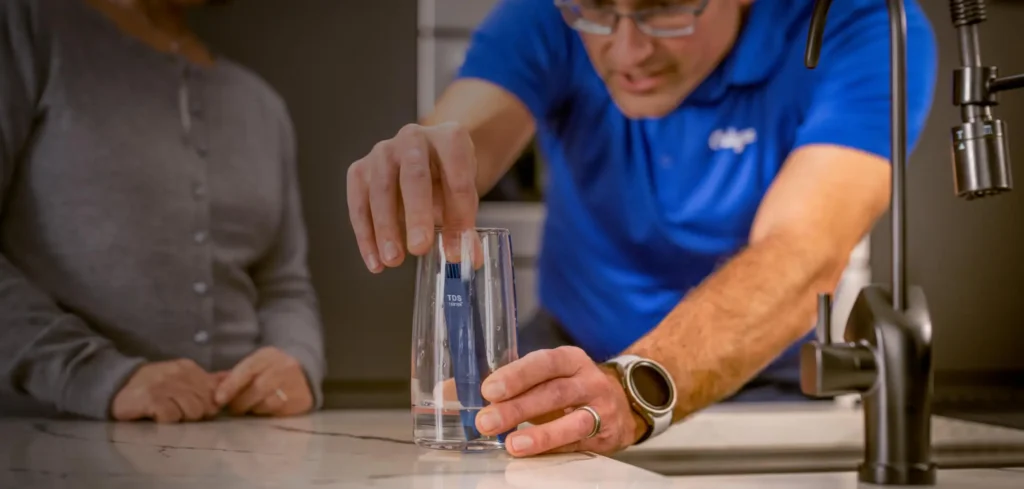
A professional water test can help identify the characteristics that matter for your household. Depending on the source and concern, testing may include hardness, pH, iron, manganese, nitrates, bacteria, or other specific substances. The appropriate test depends on what you need to investigate; a basic hardness check, for example, cannot establish whether water is free from bacteria or lead.
Ask what the test measures and whether the results will be provided in writing. If health-related contaminants are a concern, you may need analysis from a certified laboratory. Follow the sample-collection instructions carefully, since an improperly collected sample can affect the findings.
Once the results arrive, ask for a plain-language explanation. You should understand which results need attention, what they mean, and whether any action is recommended. A useful assessment gives you information to make a decision, not pressure to purchase equipment immediately.
Choosing Treatment That Matches the Problem
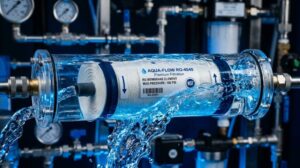
Different treatment technologies do different jobs. Sediment filters capture particles such as sand or rust. Activated carbon can reduce certain tastes, odors, and selected compounds. Reverse osmosis systems can reduce many dissolved substances in drinking water, depending on the model and its verified performance. Ultraviolet disinfection may be appropriate for certain microbial concerns, but it doesn’t remove dissolved minerals or chemicals.
Hard water is a particularly common source of household frustration. Mineral deposits can accumulate on faucets, inside water heaters, and around shower fixtures. They may also make soap less effective, leaving laundry feeling stiff or surfaces harder to clean.
In these situations, a water softener may help. Conventional ion-exchange softeners reduce hardness by exchanging calcium and magnesium ions for other ions, commonly sodium. This can limit scale formation and improve the way soap behaves. However, a softener isn’t a universal purifier and should not be expected to remove every unwanted substance.
The important question is always what the equipment is designed to address. Check the manufacturer’s performance documentation and relevant independent certifications. If a provider recommends several components, ask why each one is needed and how it relates to the test results.
Think About Maintenance Before You Buy
A treatment system is a long-term household purchase, so the initial price is only part of the picture. Filters and cartridges need replacement, reverse osmosis membranes have a service life, and softeners generally require salt and periodic regeneration. Some systems also need cleaning, sanitation, or professional servicing.
Ask about these requirements before installation. Find out how often parts need replacing, how much they cost, and whether routine maintenance can be handled at home. Equipment that is difficult to access or expensive to maintain may become frustrating, even if it initially seems like a good deal.
Keep a record of installation dates, service visits, and water-test results. It’s a simple habit, but it helps you track performance and notice when something changes. If the water develops a new odor or the original staining returns, don’t assume the system has failed without investigating; the cause may be different from the one you addressed initially.
Make a Confident Decision, Not a Rushed One
Improving water at home doesn’t have to involve the biggest system on the market. It starts with paying attention, understanding the source, and testing for the concerns that matter. From there, you can compare treatment options based on performance, installation needs, maintenance, and overall cost.
Take your time, ask questions, and be cautious of promises that one product can solve every water problem. A reliable recommendation should be clear about what a system can do and where its limits are.
Good water management is really about making informed choices. When you understand what’s coming through your taps and choose treatment that suits your household, everyday routines become a little easier—and you can stop guessing about what’s in the glass.